

The Italian pioneering project to reduce CO₂ emissions in the cement industry
Heidelberg Materials has set one of the most ambitious decarbonisation objectives in the cement sector, aiming to significantly reduce CO₂ emissions and contribute to the mitigation of global climate change.
Decarbonisation in cement production is one of the most complex challenges within the Green Transition.
The Heidelberg Materials Group is addressing this challenge with strong commitment and determination, developing projects across several of the countries in which it operates by deploying the best and most innovative technologies available. At the same time, the Group continuously works to optimise its products and processes in order to achieve the lowest possible CO₂ footprint.
In addition to these significant efforts, the implementation of carbon capture, utilisation and storage (CCUS) is of fundamental importance for the cement industry, as two thirds of direct emissions originate from the calcination of one of the main raw materials, limestone, during the clinker production process. As these emissions are intrinsically linked to the chemistry of the production process, the majority of CO₂ emissions are therefore unavoidable.
CCUS is thus not only a necessary prerequisite for achieving near-zero direct emissions in our sector, but also a key enabler of the ongoing innovation process in hard-to-abate industries - those sectors in which the reduction of carbon dioxide emissions is particularly ambitious. Through CCUS technology, it becomes possible to move towards the supply of near-zero products, with captured CO₂ emissions, and to significantly increase the potential to fundamentally transform cement production, enabling an unprecedented level of CO₂ reduction.
The Heidelberg Materials Group aims to offer net-zero cement across its entire product portfolio by 2050. To achieve this objective, a range of synergistic measures is being implemented, including increased use of alternative fuels, the use of alternative secondary cementitious materials (including recycled materials), and carbon capture, utilisation and storage (CCUS).

Claudia Capone
Project Coordinator

Federica Doneda
Communication Specialist Heidelberg Materials Italy
Heidelberg Materials Italia Cementi
Via Lombardia 2/A
20068 Peschiera Borromeo MI
Italy
In Brevik , Heidelberg Materials has built and commissioned the world’s first industrial-scale carbon capture and storage (CCS) facility at a cement plant. Thanks to the essential support of the local government, the strong social acceptance of CCS technology in Norway and the positive cooperation with the authorities, the new CO₂ capture and storage facility was inaugurated in June 2025. The Brevik CCS plant represents the first major milestone in Heidelberg Materials’ strategy to combat climate change, delivering a significant contribution to the reduction of greenhouse gas emissions associated with cement production.
The Heidelberg Materials Group is among the leading players driving the transition towards carbon neutrality in the cement industry, with the goal of achieving net-zero production by 2050.
DREAM
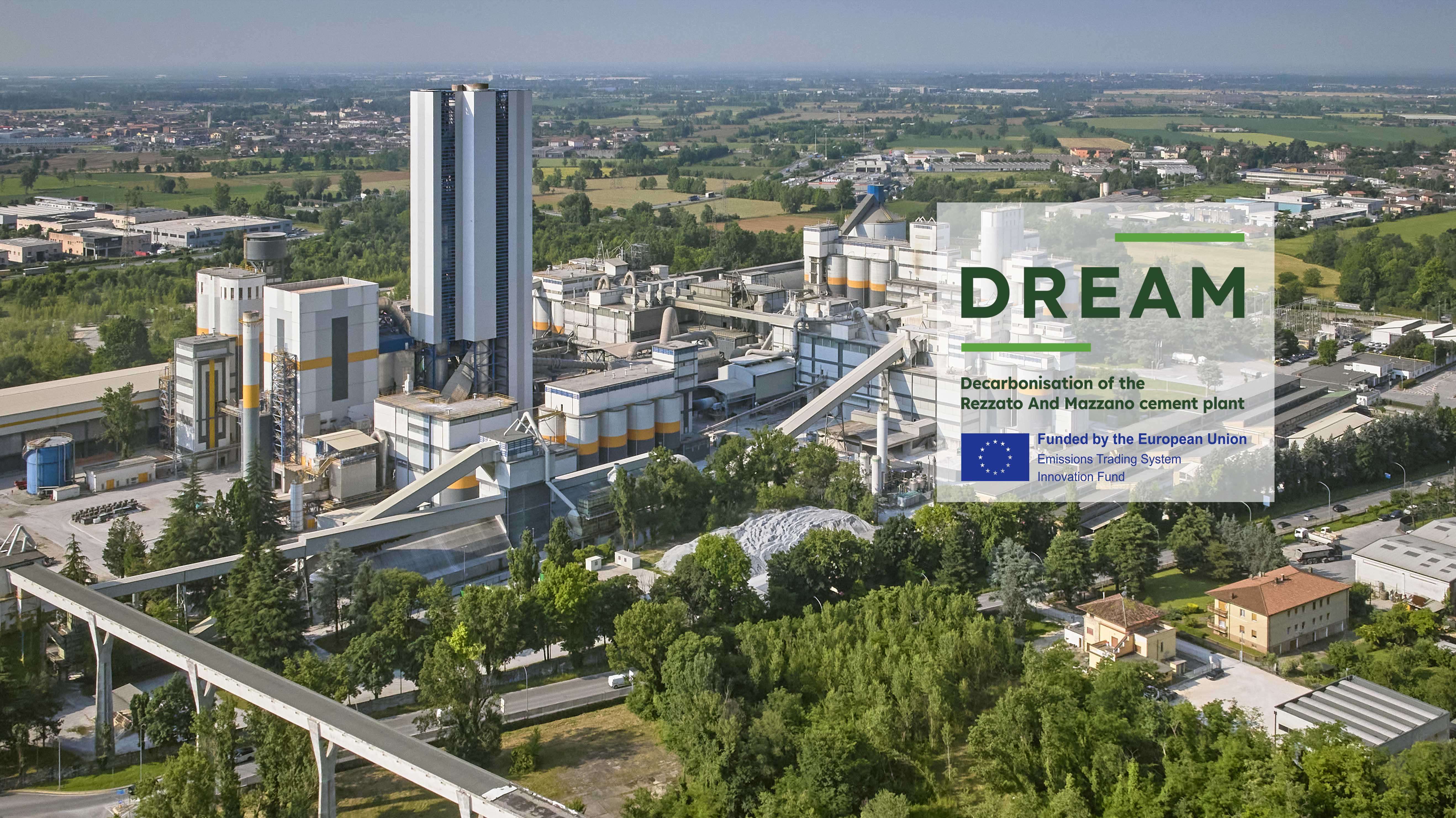
The DREAM project (Decarbonisation of the REzzato And Mazzano cement plant) represents a strategic pillar in achieving CO₂ emissions reduction in the cement sector and strengthens Heidelberg Materials Italia’s ambition to position itself as a leader in low-carbon and carbon-captured cement production, driven by advanced technologies and a strong environmental and social responsibility.
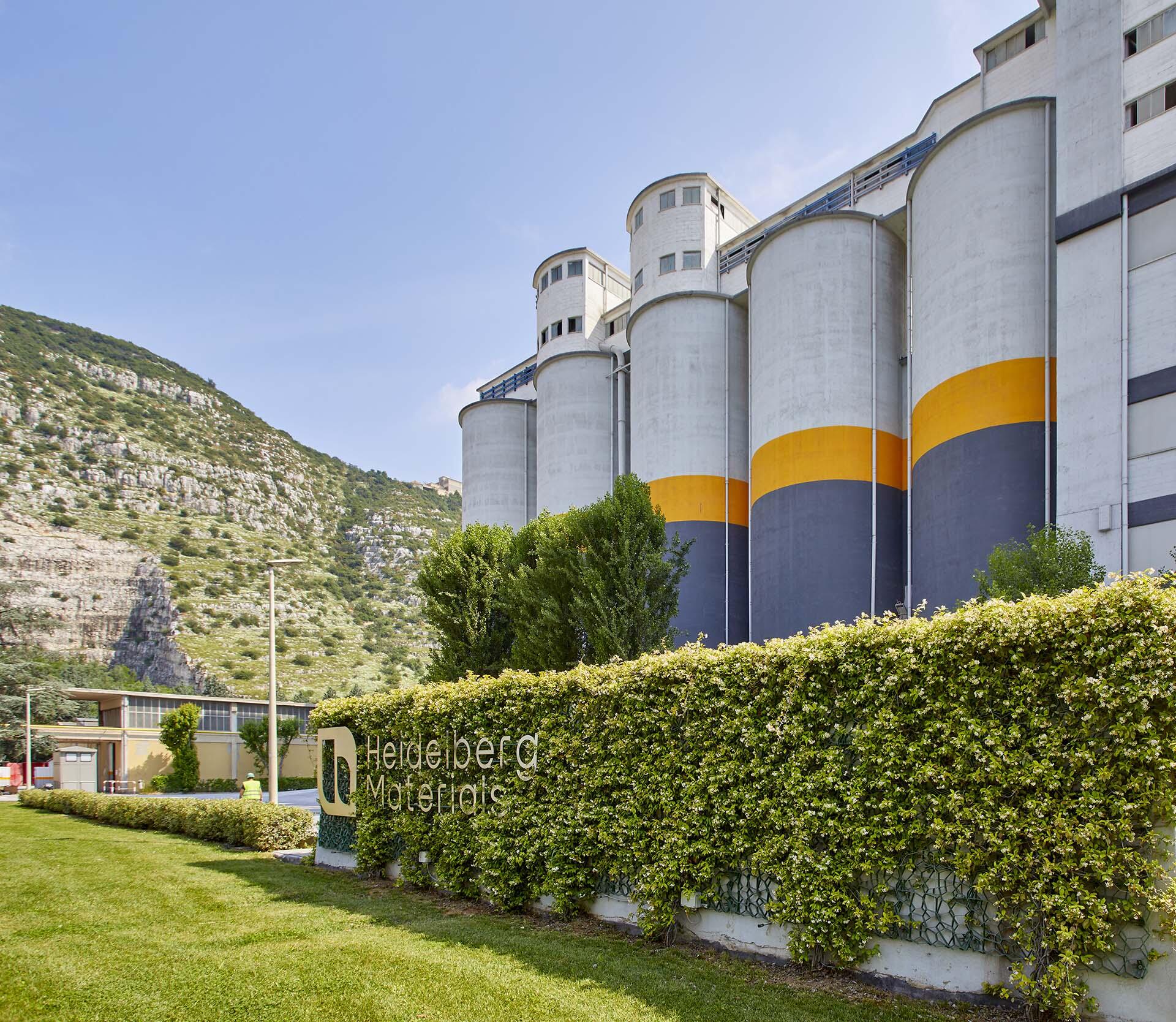
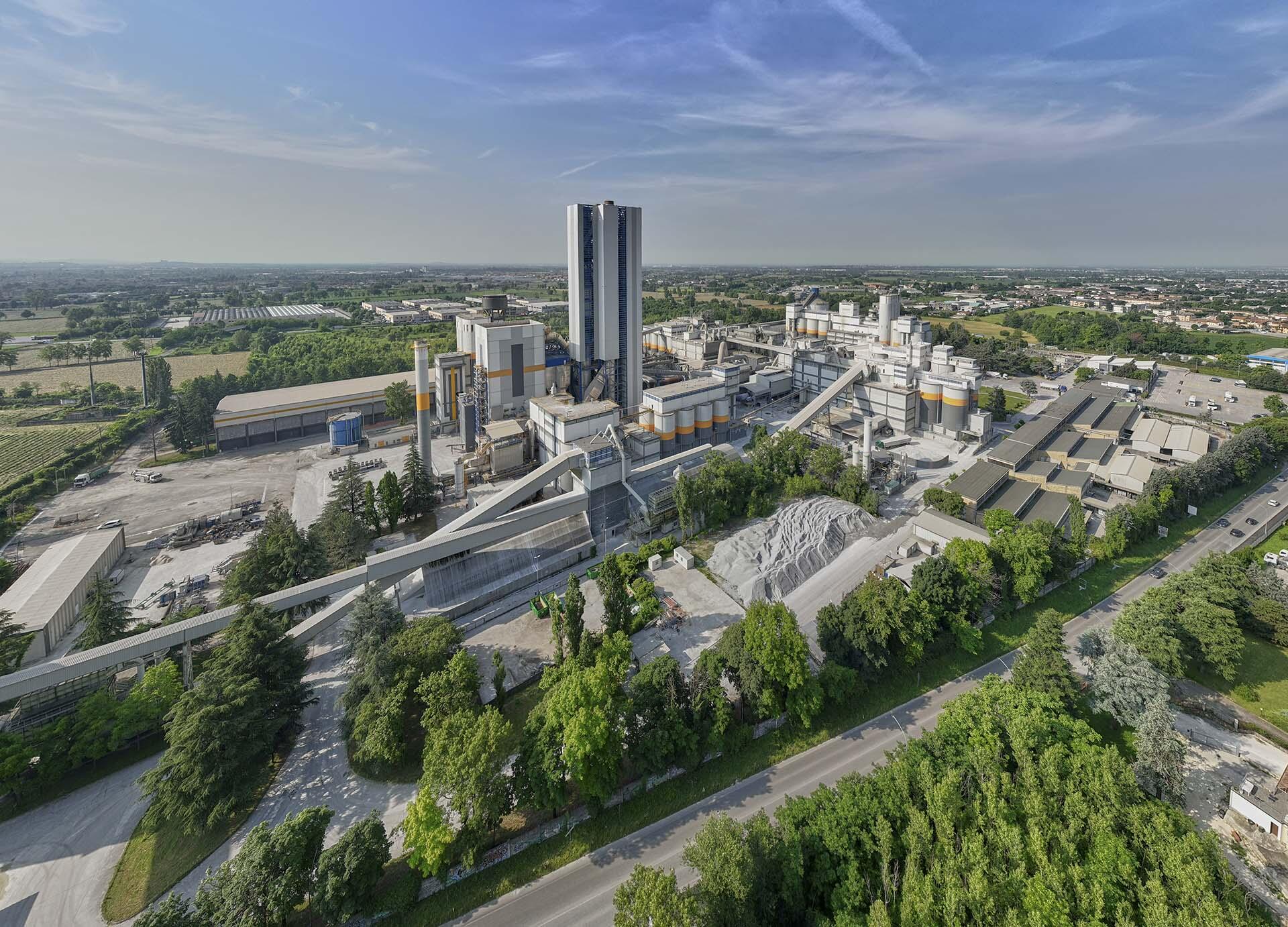
DREAM is therefore a highly significant investment aimed at the decarbonisation of the Rezzato–Mazzano cement plant (Brescia). The project leverages on the implementation of a highly innovative hybrid carbon capture solution, fully integrated into the grey and white clinker production lines. This will make the site the first full industrial-scale carbon-captured cement plant in Italy and the first carbon-captured white clinker facility across the entire Heidelberg Materials Group.
In November 2025, DREAM was selected among the projects eligible for the European Union Innovation Fund, one of the EU’s flagship funding programmes supporting innovative decarbonisation technologies.
At the end of March, with the signing of the Grant Agreement (No. 101250849) between Heidelberg Materials Italia and CINEA - the European Climate, Infrastructure and Environment Executive Agency, responsible for managing the programme - the funded project formally came to life and entered its procedural implementation phase. This phase is aimed at achieving the technical and economic objectives aligned with the programme approved by CINEA, to benefit from European funding.
A key milestone will be the Final Investment Decision by the Heidelberg Materials Italia Cementi’s parent company, Heidelberg Materials AG. This decision will rest on multiple enabling factors, including the clear definition of the CCS regulatory and legislative framework in Italy, the establishment of an appropriate national incentive scheme providing support for both investment and operating costs, and the development of the transport and storage infrastructure required for the successful implementation of the DREAM project based on CO₂ emissions capture.
| Coordinator | Affiliated entity |
|---|---|
Heidelberg Materials Italia Cementi SpA (Grant: 100%) | Heidelberg Materials AG (Grant: 0%) |
Heidelberg Materials Italia Cementi S.p.A. is the sole beneficiary of the Grant Agreement (100%), with its parent company, Heidelberg Materials AG, with the role of Affiliated Entity.
The technology
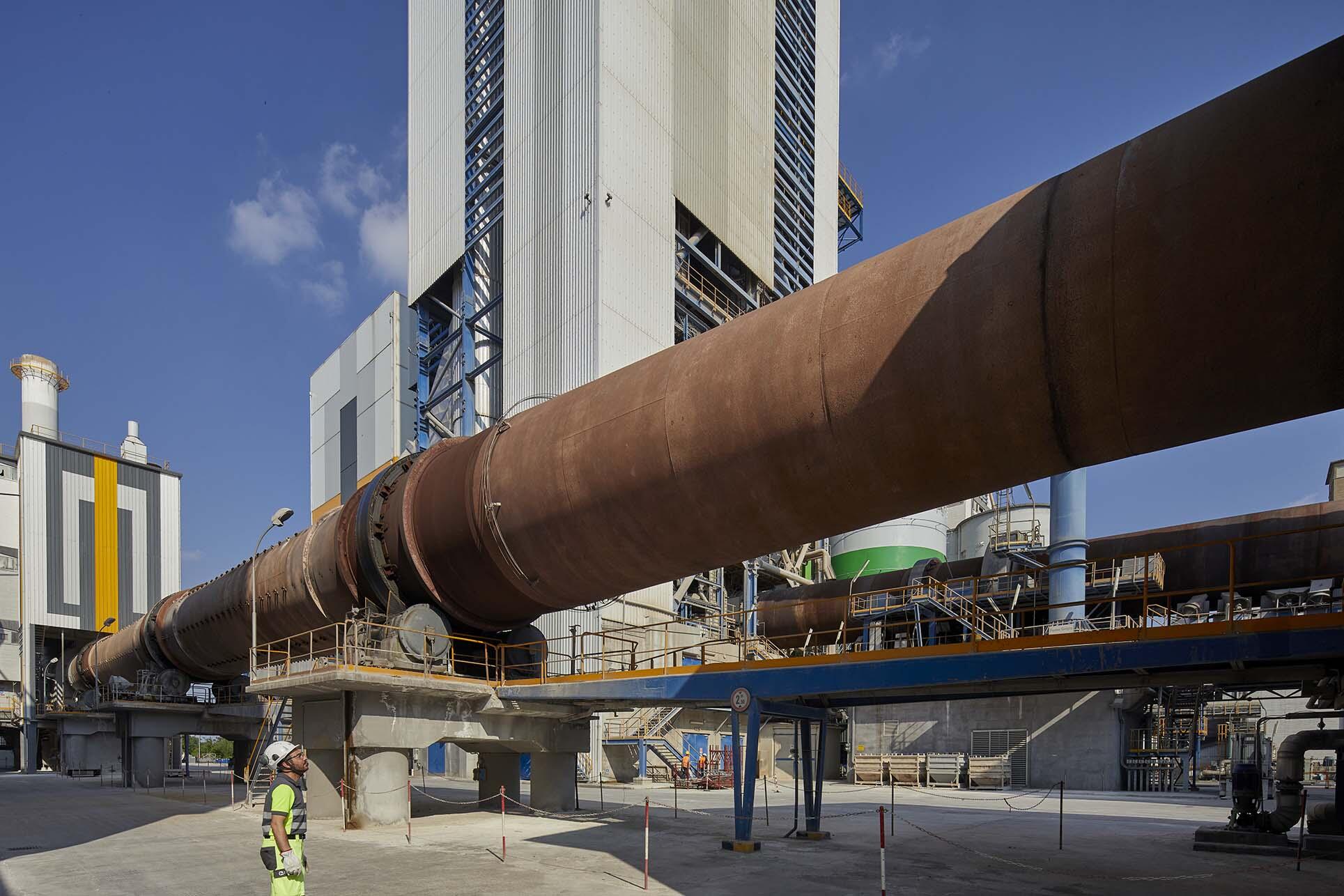
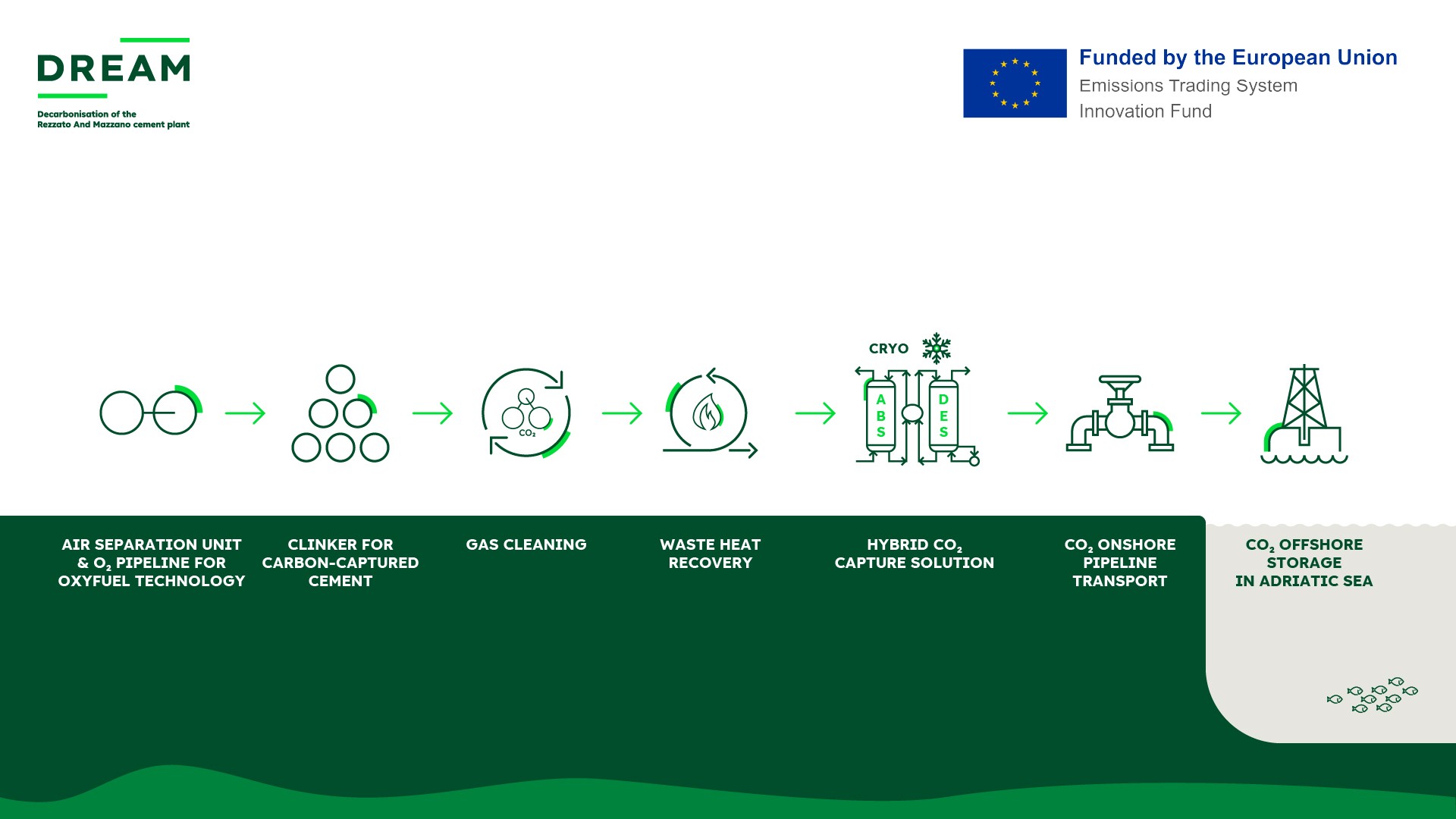
The grey clinker production kiln (with a target permitted 1 million tonnes per year) will be converted to Advanced Oxyfuel technology, developed in-house by Heidelberg Materials, combined with cryogenic CO₂ capture. High-purity oxygen will be supplied through a hybrid solution combining on-site production and pipeline supply.
The white clinker production line (with a target permitted capacity of approximately 187,500 tonnes per year) will be equipped with alternative fuels and a state-of-the-art solvent-based (amine) carbon capture system. Thermal integration between the two production lines represents a key element of innovation and will enable the optimisation of heat recovery to supply the thermal energy required for the operation of the amine-based capture system, thereby maximising the overall efficiency of the plant. Partial reprocessing of flue exhaust gases within the integrated configuration will also allow for the maximisation of the overall CO₂ capture rate.
The captured CO₂ will be transported via pipeline across the Po Valley and stored in depleted gas fields in the Adriatic Sea, as part of the Ravenna CCS project managed by Eni and Snam. This solution, which is already operational and currently being expanded, will ensure sustainability and continuity for the Italian industrial system.
The value of the DREAM project is not limited to the Rezzato–Mazzano site but also lies in its role as a replicable model for the entire European cement industry. DREAM will demonstrate that full decarbonisation is technically and economically feasible even in non-coastal areas, paving the way for a new generation of carbon-captured plants for other emitters in hard-to-abate sectors and beyond.
Once operational, the plant will allow for the capture of nearly all the CO₂ emissions generated over a ten-year period.
Beyond its technological innovation dimension, DREAM is fully aligned with the evolution of the Italian cement and construction market, which is increasingly oriented towards sustainable solutions. At national level, the sector is facing a dual challenge: regenerating an ageing building stock while simultaneously responding to the short-term implementation requirements of the National Recovery and Resilience Plan (PNRR) and major public infrastructure projects.
In this context, low-carbon and carbon-captured cement represents a key enabling element.
- Funded by the European Union. Views and opinions expressed are however those of the author(s) only and do not necessarily reflect those of the European Union or the European Climate, Infrastructure and Environment Executive Agency (CINEA). Neither the European Union nor the granting authority can be held responsible for them.
What is Carbon Capture?
CCS stands for Carbon Capture and Storage. The objective of CCS is to reduce CO₂ emissions released into the atmosphere. CO₂ is captured at one or more emission sources and subsequently transported, through dedicated infrastructure and/or modes, to storage sites such as underground geological formations, where it is permanently and safely stored.
CCS therefore addresses so-called “unavoidable” emissions and acts as a complementary solution to emission reduction achieved through synergistic low-carbon measures, such as process and product optimisation and circular economy approaches.
CCS encompasses technologies capable of capturing up to 95% or more of the CO₂ emissions generated both by the use of fossil fuels and by chemical reactions intrinsic to industrial processes. By preventing their release into the atmosphere - through transport to permanent storage sites in deep underground rock formations - CCS plays a key role in enabling deep decarbonisation.
Why CCS?
Recognizing that the world will continue to need cement (and concrete) in the future, we must commit to reducing CO₂ emissions in order to contribute to tackling global climate change. Ambitious emission reduction through process and product optimisation, as well as through the implementation of circular economy principles, is particularly challenging for so-called Hard-to-abate (HtA) sectors. These are industries in which carbon dioxide emissions are linked not only to combustion processes, but also to chemical reactions intrinsic to the production process and are therefore considered “unavoidable.”
HtA sectors include coal- and oil-fired power plants and industries such as cement, steel and petrochemicals. In order to drastically reduce CO₂ emissions released into the atmosphere by HtA sectors and enable their transition towards becoming “ready-to-abate,” Carbon Capture and Storage (CCS) represents the most important lever.
CCS makes it possible to capture, transport and permanently store the CO₂ produced by these industrial sectors, which remain essential to the growth and development of every country.
How can CCS help combat climate change?
Carbon Capture and Storage (CCS) is one of the most advanced technological solutions able to contribute deliver, as a synergistic lever, to a significant reduction in CO₂ emissions released into the atmosphere from industrial activities.
What is CCS used for?
CCS is essential to decarbonise energy-intensive industries with “unavoidable” CO₂ emissions, as these emissions are intrinsically linked to the transformation of raw materials, as is the case in the cement industry.