

Biodiversity management in quarries

Fifth volume of the book series on biodiversity in quarrying sites published
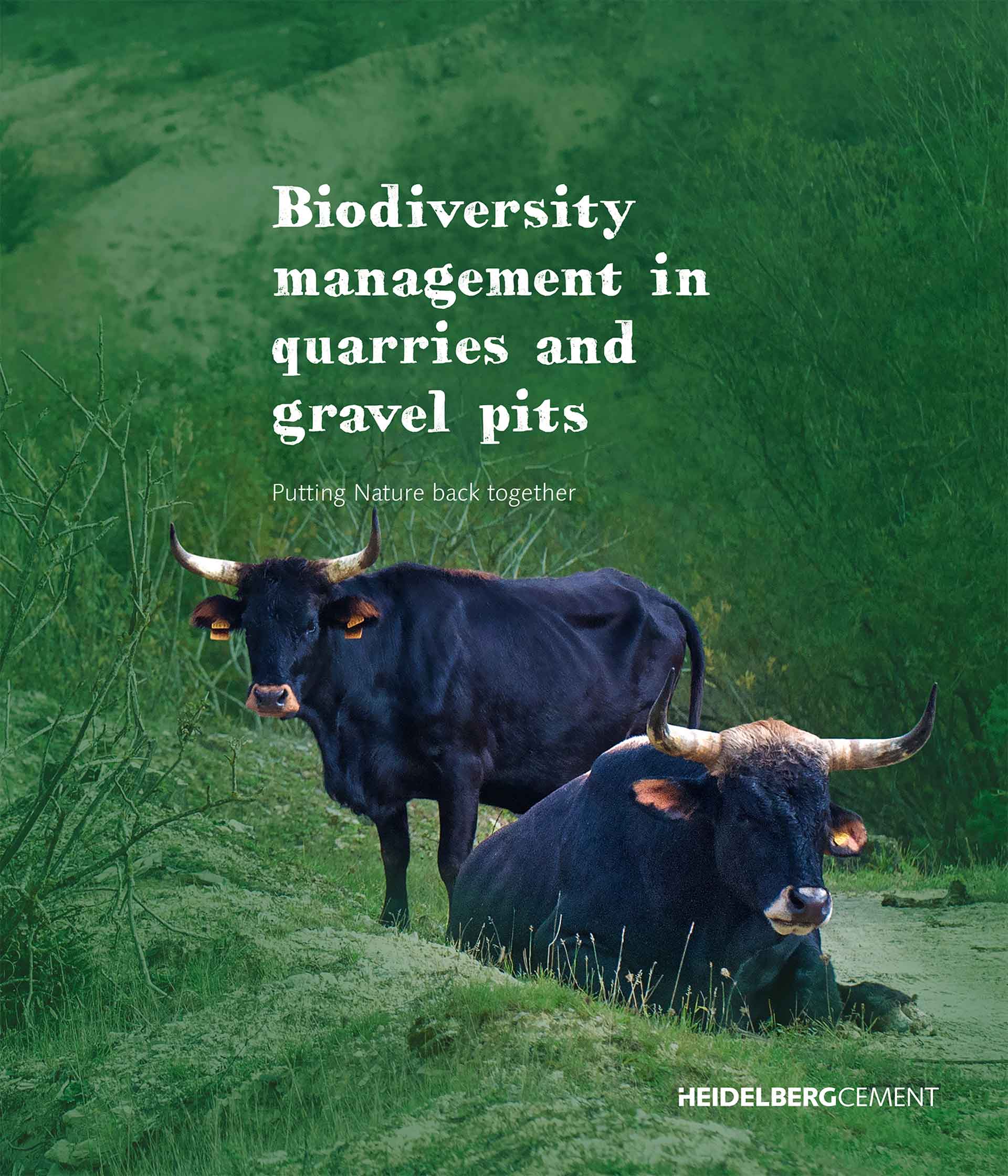
Over the past few years, HeidelbergCement has published a series of books describing the diversity of species found in its quarries. The recently published book “Biodiversity management in quarries and gravel pits” is the fifth book in the series.
Whereas the first four books introduced the plants and animals which live within our mineral extraction sites, the new book is more practical. In it, you will find success stories on restoration and conservation from a variety of HeidelbergCement sites. They demonstrate how to successfully apply and improve biodiversity management.
Best practice examples and inspiring tips
Successful projects range from preserving orchids in a gravel pit in southwest Germany, to creating a wetland in southeast England and an ambitious multi-national project to reintroduce the pasqueflower into Sweden, Germany, and Ukraine. They all serve as role models for different tasks and methods of biodiversity management.
Along with these working examples are tips and ‘how-to’ guides to inspire and assist readers to take action. The book is aimed at plant and quarry managers, environmental engineers, nature conservation groups, and rehabilitation practitioners, but also interested laymen.